Understanding the Modular Dual Mobility Hip System
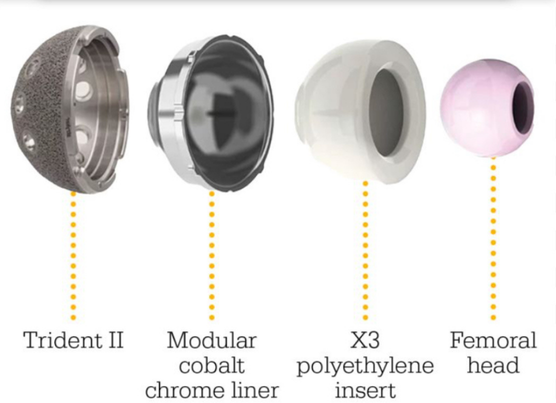
An educational look at dual mobility technology, implant design, clinical evidence, and its role in hip arthroplasty.
Introduction to MDM
The Modular Dual Mobility (MDM) Hip System is a type of dual-mobility technology used in total hip arthroplasty.
Total hip arthroplasty is a common orthopedic procedure designed to relieve pain and restore function in patients with significant hip damage. Approximately 1.5 million procedures occur annually.
Indications Associated with THA:
- Osteoarthritis, femoral neck fractures, avascular necrosis, rheumatoid arthritis, hip dysplasia, and failed previous hip surgery
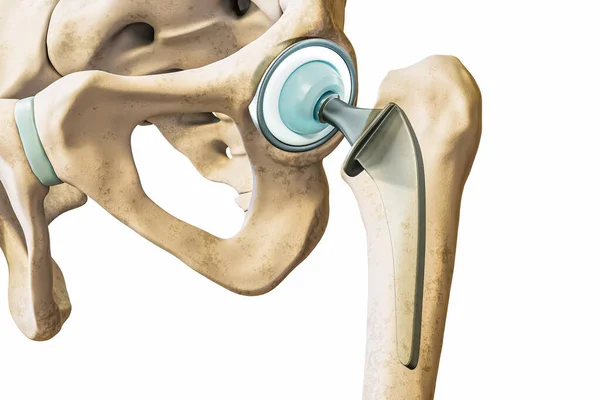
Why Modular Dual Mobility?
One of the challenges following hip replacement is instability and dislocation. Problems such as poor cup positioning, mechanical loosening, inadequate offset, and short leg lengths helped drive interest in dual-mobility designs.
Dual mobility uses two articulating surfaces rather than the single articulation found in a conventional fixed-bearing construct. This design allows the femoral head to move within a mobile polyethylene insert while the insert also moves within the acetabular shell.
Research has found that dual-mobility implants have low postoperative dislocation rates across different surgical approaches.
“Excellent clinical outcomes and patient-reported outcomes at seven-years minimum follow-up (7 – 8.5 yrs.) with zero cup failures in a cohort of 143 patients.”
What You’ll Learn
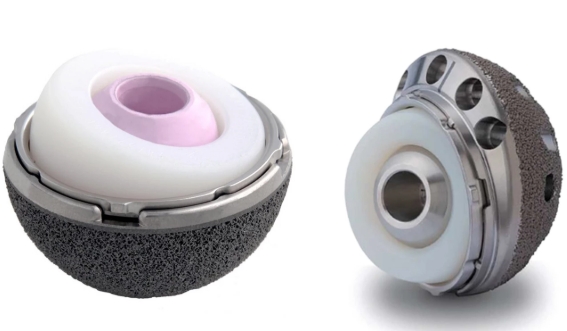
On this website, visitors can explore how MDM works, its design features, situations in which surgeons may consider dual mobility, and clinical and economic evidence surrounding the technology.
Modular Dual Mobility Implant
© 2026 EBMP LLC